
Roof coatings
Roof coating systems
Elastomeric coatings that seal and reflect, even where water ponds. Silicone is the primary system; acrylic suits the right roofs. Both renew a roof without a tear-off.
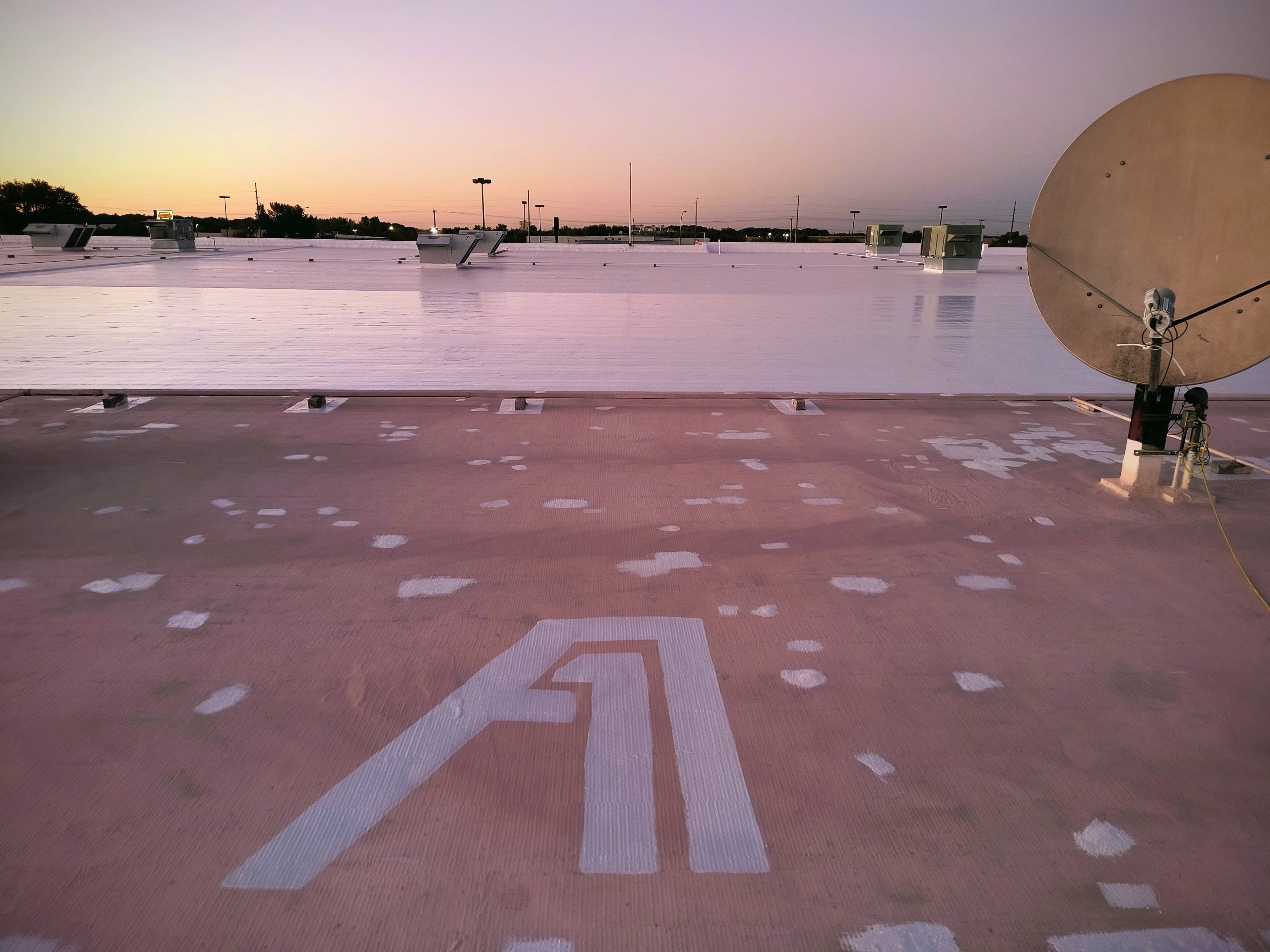
Two coatings, matched to the roof
A roof coating is a fluid-applied membrane rolled or sprayed over a cleaned and repaired roof. Silicone, the system we lead with, cures by reacting with humidity and does not reabsorb water, which makes it the right choice for low-slope roofs that hold water. Acrylic coatings are water-based and reflective, well suited to roofs with positive drainage. In both cases the dry film thickness applied sets the length of the warranty.
Silicone for standing water
Moisture-cure silicone does not reabsorb water, so it resists ponding. Warranties still require resloping areas that pond longer than 48 hours.
Acrylic where it drains
Water-based acrylic is reflective and cost-effective on roofs with positive slope and good drainage, where ponding is not the controlling factor.
Reflects the heat
A white coated surface reflects roughly 85 to 90% of solar radiation when new, lowering roof surface temperature and cooling load. Silicone picks up dirt, so aged reflectance settles lower, commonly around 80% at three years.
Thickness sets the term
Warranty follows dry film thickness. The common industry thresholds are about 20 mil for 10 years, 25 mil for 15 and 30 mil for 20, but the manufacturer's system specification is what governs the job. GacoFlex S20, the system A-1 installs, sets its own: 24 mil wet for 22 mil dry film at 10 years, 32 mil wet for 30 dry at 15, and 40 mil wet for 38 dry at 20, and Gaco asks for a further 10% over nominal to qualify as a warrantable application. Note the overlap — 30 mil dry buys a 15-year term under Gaco, not a 20-year one.
Thickness sets the term
A coating system is warranted by the dry film thickness applied. The thicker the coat, the longer the leak-free term.
Leak-free warranty
- Cleaned and repaired substrate
- Reflective white finish
- Renewable with a recoat
Leak-free warranty
- Heavier topcoat build
- Ponding-resistant silicone
- Reinforced details and seams
Leak-free warranty
- Maximum topcoat build
- Longest leak-free term
- Manufacturer-backed coverage
Warranty term follows applied dry film thickness. Areas that pond longer than 48 hours may require resloping to qualify.
See the certifications and standards behind this warrantyRead: the silicone recoat cycle explainedRoof coating questions
What owners ask before recoating an existing roof.
Silicone or acrylic, which coating do I need?
Silicone is the right call for low-slope roofs that pond, because it does not reabsorb water after curing. Acrylic is a reflective, cost-effective option on roofs that drain well. We confirm which fits after the assessment.
Does a coating hold up to ponding water?
Silicone is moisture-cure and ponding-resistant. Warranties still require resloping areas that hold water for more than 48 hours. Acrylic is best kept off chronically ponding areas.
How thick is the coating, and how is it warranted?
Dry film thickness sets the term. Industry rules of thumb put it at roughly 20 mil for 10 years, 25 mil for 15 and 30 mil for 20, but the manufacturer's published specification is what a warranty is actually written against. GacoFlex S20, the system A-1 installs, sets its own: 24 mil wet for 22 mil dry film at 10 years, 32 mil wet for 30 dry at 15, and 40 mil wet for 38 dry at 20, and Gaco asks for a further 10% over nominal to qualify as a warrantable application. Note the overlap — 30 mil dry buys a 15-year term under Gaco, not a 20-year one.
Will a coating lower cooling costs?
A white reflective surface reflects about 85 to 90% of solar radiation when new, which lowers roof temperature and reduces cooling load. Aged reflectance is lower, commonly around 80% at three years as the surface picks up dirt.
What roofs can you coat?
Coatings are applied over SPF, TPO, EPDM, PVC, and metal once the roof is cleaned and any failures are repaired.
Is a coating a real roof or just maintenance?
Applied at warranty thickness, a coating system renews the roof and carries a manufacturer warranty. It is more than a maintenance coat.
How long does a coating last before it needs to be recoated?
The dry film thickness applied sets the warranty term, roughly 10, 15, or 20 years. At the end of that term, a fresh recoat renews the system rather than replacing the roof.
- Read: What Hail Actually Does to a Spray Foam Roof, and Why FM's Very Severe Hail Zone Now Reaches All Five of Our States
- Read: Roof Coating and Spray Foam in Cold Weather: When the Upper Midwest Season Actually Closes
- Read: 10-Year vs. 20-Year SPF Roofing Warranty: What Actually Changes
- Read: Why Ponding Water Destroys Single-Ply Roofs
Related services
- RSTCommercial Roof RestorationRecover a failing single-ply, metal, built-up, modified bitumen, or SPF roof in place with a coating or spray foam system, no tear-off required.
- SPFSpray Polyurethane Foam RoofingA single continuous membrane sprayed in place. It bonds to the deck, self-flashes every penetration, and finishes with zero seams to fail.
- INSCommercial Roof InspectionA documented field assessment with thermal moisture mapping and adhesion data, delivered as a written report you can act on before any work begins.
See whether your roof can be coated instead of replaced
If the substrate is sound, a coating system can renew it in place at a fraction of replacement cost. We will tell you after the assessment.
41-year commercial roofing and insulation record