
Roofing / Restoration / Single-ply
Single-ply roof restoration
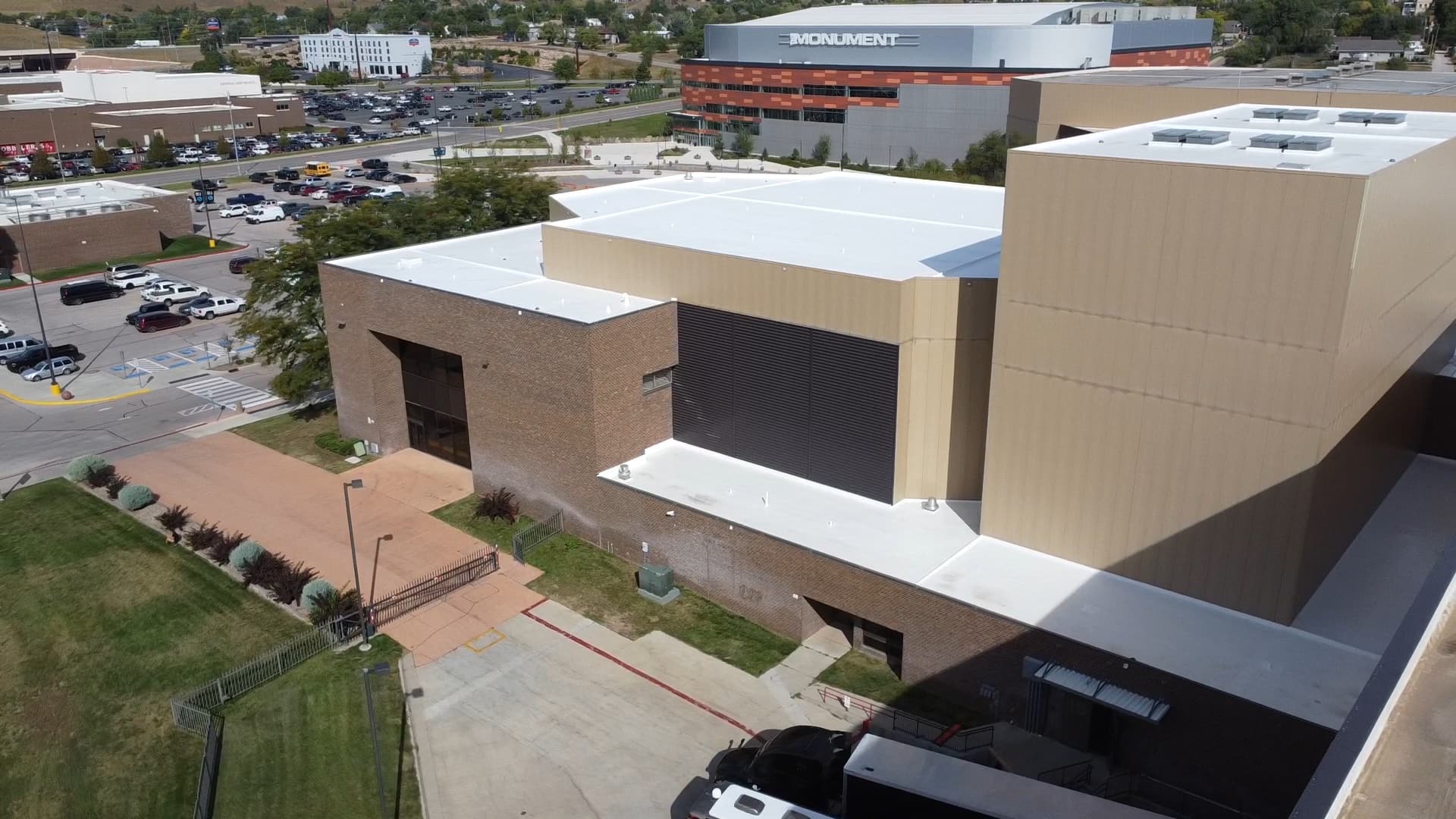
Restore aging TPO, EPDM, and PVC membranes with a fluid-applied coating that re-seals every seam and lap and renews the roof in place.
- Method
- Coating
- Reflectivity
- 85 to 90% new
What goes wrong, and where
Single-ply membranes (TPO, EPDM, and PVC) are reliable when new, but they fail predictably with age: seams open, the sheet weathers and chalks, and fasteners back out. A restoration coating re-seals the membrane as one continuous surface, reinforcing the seams and details that fail first, so the roof renews in place instead of being torn off.
TPO that has weathered
Thermoplastic TPO chalks and thins as it ages, and welded seams can split. A coating re-seals the field and seams as one membrane before leaks start.
EPDM that has shrunk
EPDM rubber shrinks over time, pulling at seams and flashings. A restoration coating relieves that stress with a continuous, adhered surface.
PVC at the end of its term
PVC holds up well but loses plasticizer and grows brittle with age. A coating restores flexibility and waterproofing without removing the sheet.
Why coating wins here
Single-ply restoration carries a high return: the membrane stays in place, the deck and insulation are untouched, and the roof is renewable on a recoat cycle.
The method that fits
Coating
A fluid-applied coating re-seals TPO, EPDM, and PVC as one continuous membrane, reinforcing the seams and laps that fail first. No tear-off.
High
Restoration keeps the deck and insulation in place, so the spend goes to the membrane that fails, not to a tear-off and a full rebuild.
Restoration on this roof
- 01
Survey
Moisture and adhesion testing confirm the deck and insulation are dry and the membrane is still attached.
- 02
Clean
The membrane is power-cleaned and rinsed so the coating bonds to a sound surface.
- 03
Detail seams
Open seams, laps, and penetrations are repaired and reinforced before the field coat goes on.
- 04
Coat
The coating is applied at warranty thickness, renewing the roof in place with a 10, 15, or 20-year term.
Single-ply vs. metal vs. built-up
The three commercial substrates fail differently, and the right renewal path differs too: coating for single-ply and metal, spray foam conversion for built-up. All three renew in place without a tear-off. Here is how they compare.
| Attribute | Single-ply (TPO / EPDM / PVC) | Metal panel | Built-up (BUR) |
|---|---|---|---|
| First failure point | Seams and laps | Seams, fasteners, rust | Flood coat, ply separation |
| How water gets in | Open seams, shrinkage stress at flashings | Lap joints and aging fastener gaskets | Cracked flood coat, water tracking between plies |
| Renewal method | Fluid-applied coating | Coating (SPF alternative) | Spray foam conversion |
| Adds insulation | No | Only with the SPF option | Yes, ~R-6.5 / in |
| Tear-off required | No | No | Rarely |
| Restored warranty | 10 / 15 / 20 yr | 10 / 15 / 20 yr | 10 / 15 / 20 yr |
| Ruled out when | Wet insulation or failed adhesion | Structural rust-through in panels | Widespread trapped moisture |
Typical industry figures for comparison. Actual condition and restorability are confirmed by moisture survey during the assessment.
Different roof, same approach
- Ribbed & standing seamMetal roof coating
- Smooth & gravel BURBuilt-up restoration
- All substratesRestoration overview
All restoration work is self-performed by A-1 with 10, 15, and 20-year warranties.
Single-ply restoration questions
Can you coat TPO, EPDM, and PVC?
Yes. All three single-ply membranes can be restored with a fluid-applied coating once the roof is cleaned, the seams are inspected, and any failures are repaired.
Why coat instead of replacing the membrane?
Coating re-seals the existing membrane in place at a fraction of replacement cost, with no tear-off and no disruption. It is the high-ROI path when the deck and insulation are sound.
What happens at the seams?
Seams and laps are the first thing to fail on single-ply. We detail and reinforce them as part of the system so the finished coating is continuous across the field.
How do you prepare a single-ply roof?
The membrane is cleaned, loose laps and open seams are repaired, and adhesion is confirmed before the coating goes on. A primer is used where the membrane requires it.
How long does a coated single-ply roof last?
Warranty term follows the dry film thickness applied: roughly 10, 15, or 20 years. The roof is renewable on a recoat cycle after that.
Is my single-ply roof a candidate?
If the deck and insulation are dry and the membrane is still attached, it usually is. We confirm with a moisture survey and adhesion test before recommending a coating.
What is the difference between TPO and EPDM roofing membranes?
TPO is a thermoplastic membrane with heat-welded seams and a reflective white surface. EPDM is a rubber membrane, traditionally black, with seams that are glued or taped rather than welded; reflective EPDM formulations also exist.
See if your TPO, EPDM, or PVC roof can be coated
If the deck is dry and the membrane is attached, a coating renews it in place at a fraction of replacement cost. We confirm with a moisture survey.
41-year commercial roofing and insulation record