
PRJ-08 / Field feature
Woonsocket School District
Woonsocket, SD · SPF Roof System Restoration · 23,000 sf · 2025
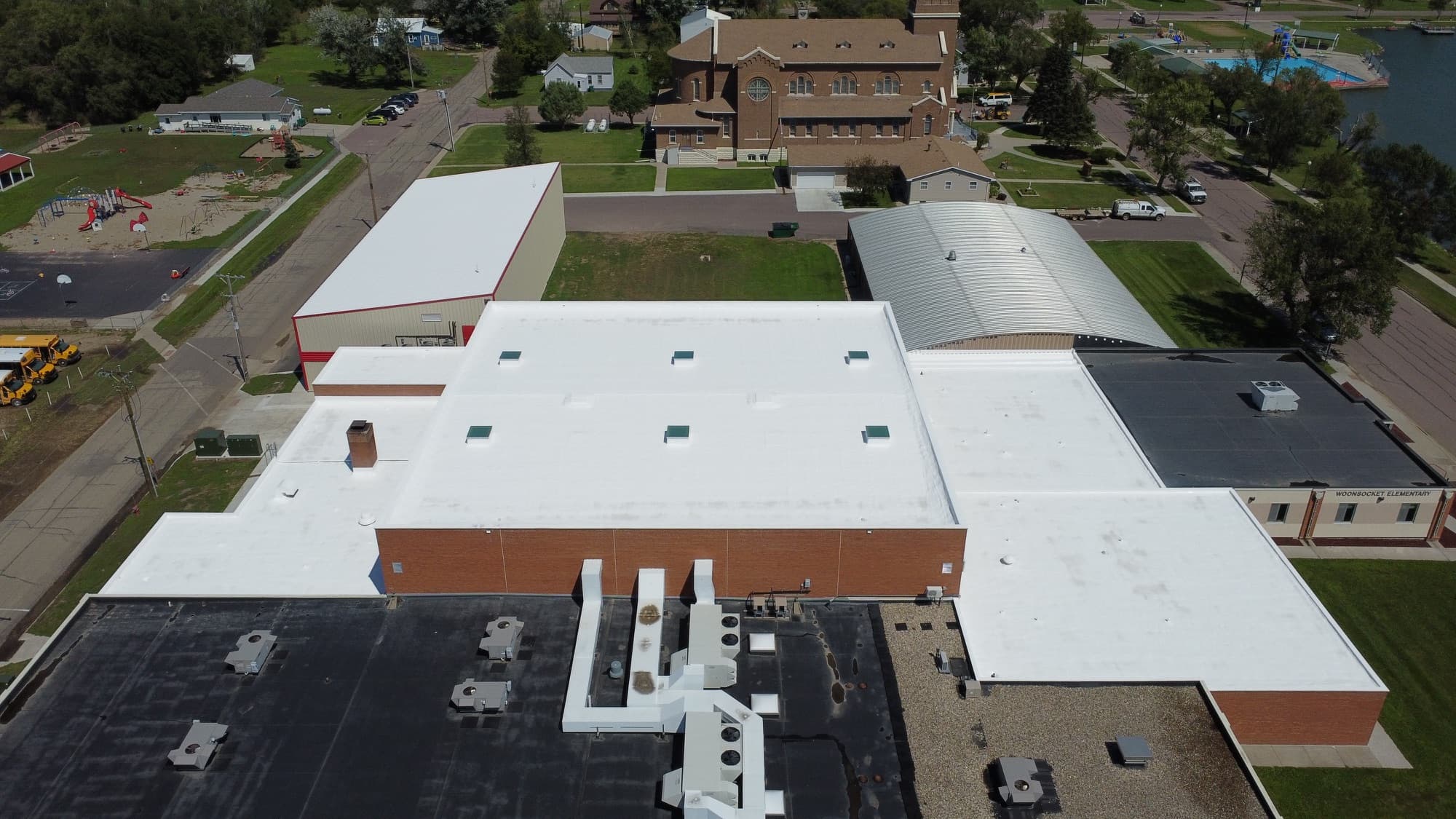
A-1 did not build this roof. Another contractor did, using a spray foam system and application practices that do not hold up under standing water — and on a low-slope prairie school, water stands. The foam took on moisture until it was saturated, and the building underneath started leaking in several places at once. By the time the district called A-1, the question was no longer whether the roof was failing. It was whether it had to come off.
It did not, but the fix was never going to be a fresh coat of anything. Coating a wet roof seals the water in. Coating a flat roof that ponds just puts a new surface on the same problem, and in a few seasons the district would have been standing in the same place. The roof needed the moisture out and the water moving.
So that is where A-1 started. The saturated foam was cut out and replaced section by section, and then — the part that actually solved it — additional spray foam was built up across the field to create positive slope, so water runs to the drains instead of sitting on the membrane. Spray foam is one of the only roofing materials that can be sprayed thicker in one place than another, which is what makes re-sloping a finished roof possible at all without touching the deck.
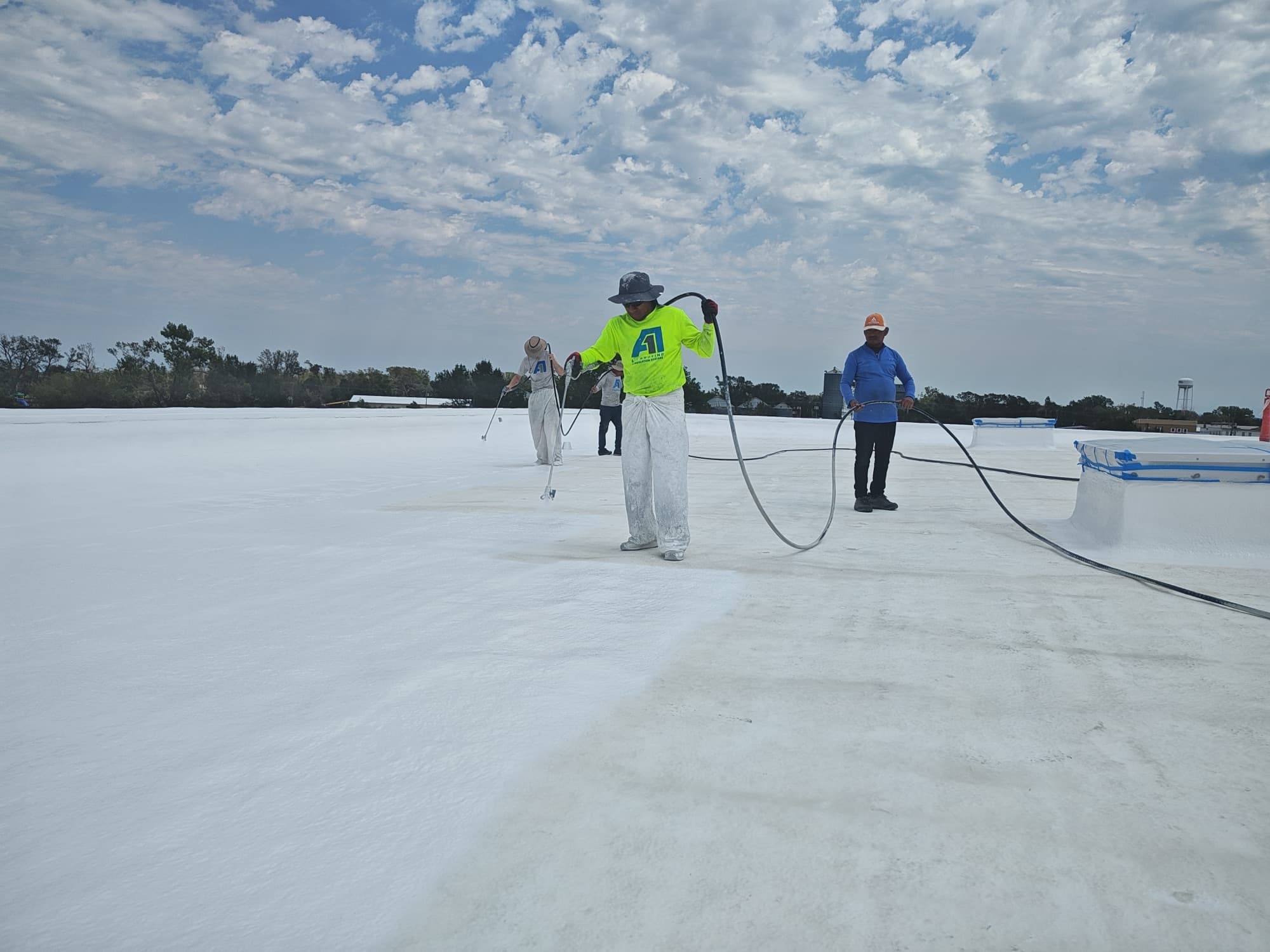
Only then did the roof get its surface. Gaco S20 silicone went down over the whole field as a seamless membrane, chosen specifically because silicone is unaffected by ponding water — the exact condition that had destroyed the original system. Sixteen working days, start to finish, with only minor interruption to the school's activities, and the district ended up with a 20-year manufacturer NDL warranty on labor and material.
Two years later a hailstorm cut the membrane open across the roof. Because the system was warranted and restorable, that did not mean starting over: each impact cut was repaired individually with reinforced flashing-grade silicone, the roof was washed down, and a fresh S20 topcoat brought the whole field back to new condition. Six days, zero disruption to the school, and the 20-year warranty was reinstated. That is the argument for a restorable roof in one paragraph — the same storm on a conventional membrane is a claim, a tear-off, and a construction schedule wrapped around a school year.
What restoration saved here
Replacing this roof would have meant stripping 23,000 square feet of foam and insulation off a working school, hauling it to a landfill, and rebuilding from the deck up — to solve a drainage problem that could be solved from above.
- A fraction
- Of replacement cost
- 23,000 sf
- Roof deck untouched
- 20 yr
- NDL warranty, reinstated
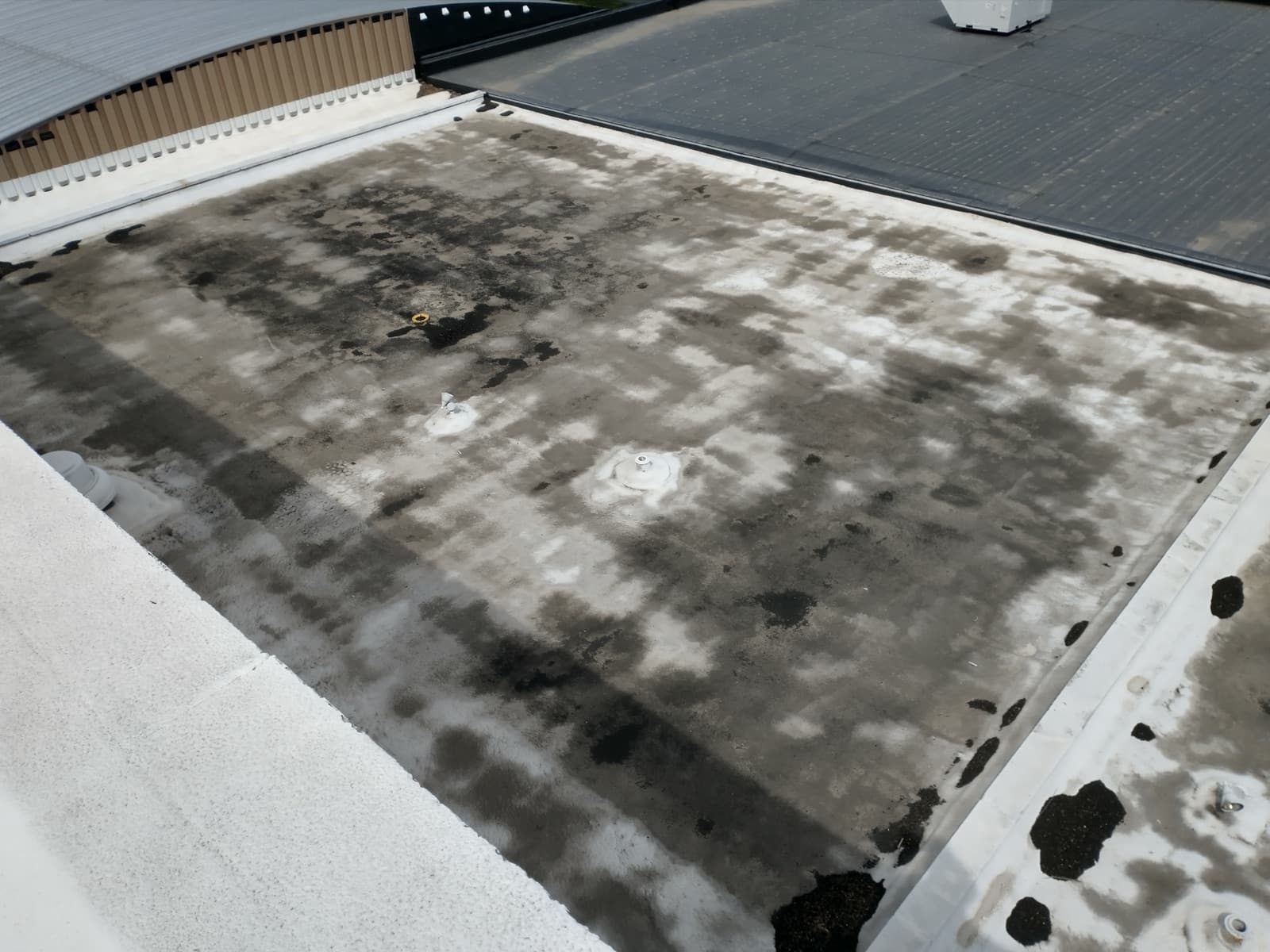
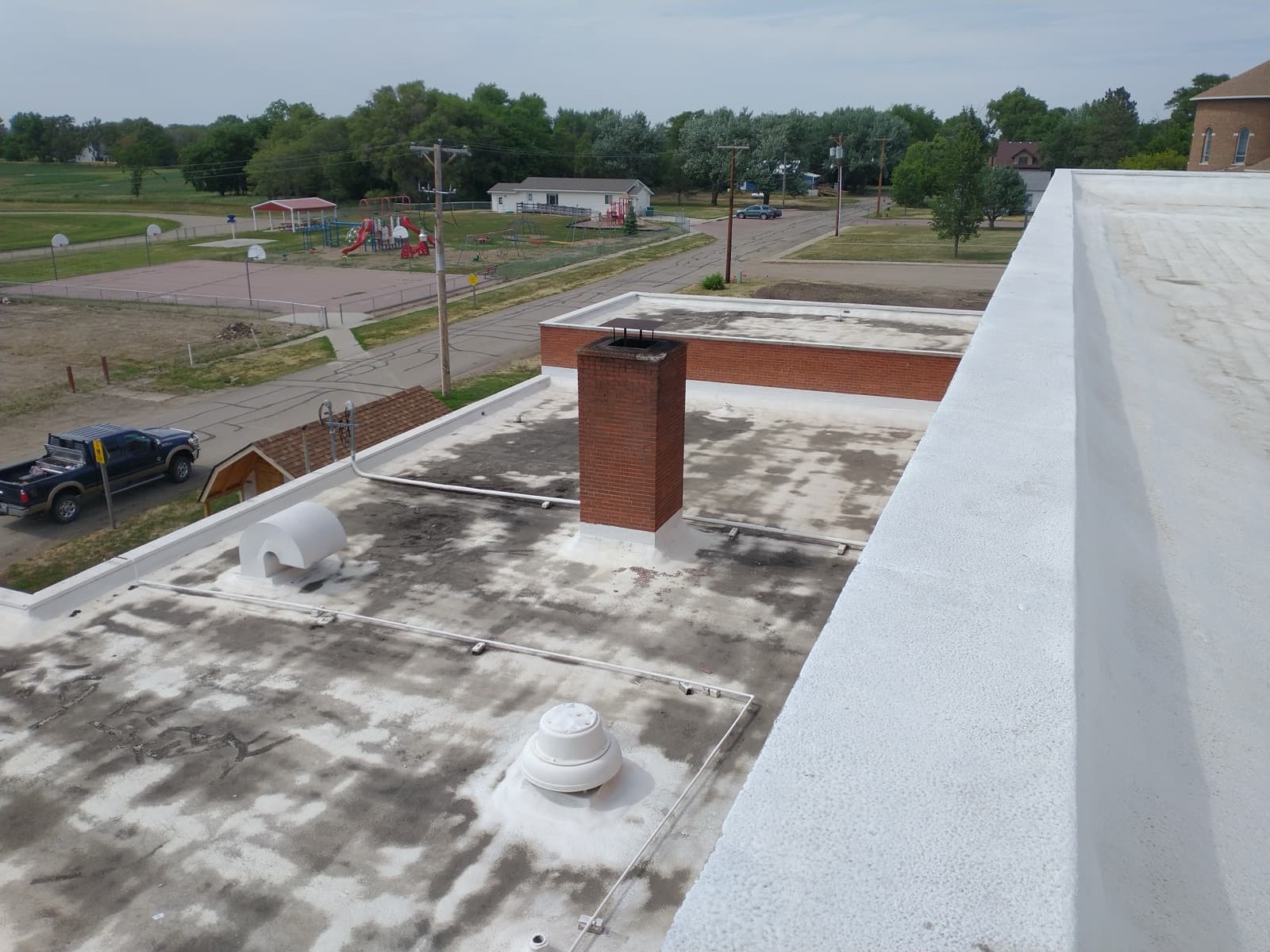
Gaco Flex specification SPF-S20-38-20 for the restoration and RC-S20-38-20 for the recoat, carrying a 20-year manufacturer NDL warranty on labor and material, reinstated in full after the storm work.
Fix the drainage, then seal it. A roof built to be restored survives the storm that ends a conventional one.
Get a free assessment